Tuesday, February 15, 2011

Off to Paris... via ATL and CVG of course!


Apparently I spoke too soon when I mentioned that my last trip included my first visit to the de-ice pad. We leave DTW today on a five day Paris (CDG) trip... with stops in Atlanta and Cincinnati of course, but re-aquaint ourselves with the de-ice pad once again. Our de-ice coordinator, you can see him just outside my window, will connect his headset in just a moment as this former North Central Airlines (NCA) DC-9-50 leaves the pad. 


And here's the dash 50 again as they rotate off runway 22L in light snow. In just a moment the non flying pilot, referred to as the PM (pilot monitoring) will call positive rate as soon as he or she sees the altimeter climb AND the vertical speed indicate a positive rate of climb. All of the -30's have been retired leaving only five -40's and 34 -50's flying with Delta as of 1/1/11. 

Here's how 'ol 761 looked just a few years ago.

This particular DC-9 was delivered new to NCA on 4 March 1976 as N761NC, MSN 47709. She has 16 first class and 109 coach seats and is powered by two JT8D-17 Pratt and Whitney engines. Do you know what JT8D means in Pratt and Whitney speak? Answer, according to my very first 727 ground school many, many years ago when such topics were raised is; Jet, Turbofan, Model 8, Smokeless. Yes smokeless!

When the DC-9's finally retire we'll still have JT8D's on the property in the form of the -219 powering our MD-88's.


OK, we're off to ATL from runway 22L in DTW. The temperature has risen to 8 SAT with drizzle and fog so the engine anti-ice has been selected on since taxi and remains on for the takeoff. Our procedure is to operate engine anti ice any time it's below +10 SAT in moisture. That includes on the ground with a visibility less than 1 mile or with snow or ice on the ramps.


After ATL, Dean and I deadheaded to Cincinnati, laid over downtown and met Erik, our relief pilot the next day for our flight to CDG. The last time I was in CVG was in a DC-9 many years ago and taxiing out after not having taxied in was an exercise. Usually the taxi in gives you a pretty good idea of the airport layout, but we didn't have that luxury today. Erik is in the right seat and Dean is in the jumpseat acting as relief pilot on this leg. 


You might think that Erik is studying!! Well in a manner of speaking yes, but today is the first day of our change over to Shipsets, which means that our personal Jeppesen's, that we've hauled around for years is coming to an end.  Keep in mind that we're flying both the 757 and 767 which literally fly everywhere in our system, domestic and international. Revision day which I think is twice a month, is looked upon as a bad toothache day. It's horrendous! In fact, you can't carry all of these manuals in your bag so after determining where your rotation visits you select the manuals and leave the others behind in a box marked with your name. 

But for this rotation, even though the new shipsets are here we have to carry our bags one last time. With three men, three suitcases, three flightbags AND the shipsets, the cockpit is VERY crowded. 


We're in a Boeing 767-300ER today and as agents board the flight, Erik, Dean and I complete walk around, preflight, pushback and performance checklists. We've also discussed how we'll handle emergency procedures, the SID or the ROCKT5 departure procedure which is an RNAV operation requiring both LNAV and VNAV. And most importantly our taxi route to runway 18R. 

"Let's see I'm facing north, 18R is to my left going the opposite direction...."

This sign appears on the terminal building before us advising that flight 44 to CDG is due off the gate in 14 minutes to meet an on time departure at 1545... and we did! I understand that there have been complaints recently with regard to DAL's on time performance... I don't know who's flying those flights, they couldn't be friends of mine. Seriously though, Delta used to delay the pushback until the final numbers were delivered via ACARS to the cockpit, thus jeopardizing an on time departure. They've since adopted the Northwest procedure of pushing on time, regardless of the disposition of these numbers. Now we'll set these critical numbers (V1, V2, Vr, stab-trim and flaps) after the push, during de-icing or waiting in line to depart which should significantly improve our ratings. In order though to insure that flaps are extended, we'll set them to a default setting during the initial taxi stage when the captain calls for a "taxi clearance."  We did this for years at NWA and it consistently landed us in the top tier of on time airlines. 

Today's flight will cover 3,767 nautical miles in 7 hours 38 minutes; we have tremendous tailwinds and will arrive in Paris some 45 minutes early. Our dispatcher knows this and has flight planned us on a more southerly route to take advantage of the jet stream and a slower than normal airspeed (not oceanic though, that will remain at 80 mach) thus saving fuel and still arriving early. Our block fuel equals 90,800 pounds including two alternates of Orly (LFPO) where Lindbergh landed the Spirit of St. Louis in 1927 and Brussels. (EBBR)  These identifiers are the FMS identifiers, the ICAO airport identifiers are ORY and BRU respectively. 

CORRECTION: Dan thanks, I can't believe I made that error. Lindbergh landed at Le Bourget in 1927 not Orly.

Why a second alternate you may be wondering? A second destination alternate is required whenever a primary alternate is considered "marginal." It's all about planning!


But before we leave... yup, another visit to the de-ice pad as we pass by this A-320.


This is my first time flying from CVG to CDG and according to our procedures, we're to send for our oceanic clearance 90 minutes prior to our Oceanic Entry Point of DOVEY. This is located at 42N67W east of Boston. In my mind I'd planned, as usual to contact Gander via ACARS for this information. But I was mistaken, we're still in New York airspace and they don't have ACARS capability so we'll do it the old fashioned way via voice. After acclimating to ACARS clearances this is a somewhat cumbersome and time consuming exercise. To make matters worse, we are not CPDLC equipped either and will make all of our position reports via HF frequencies. 

Oh Boy!


Our flight plan has us on NATX or Nat Track X-Ray according to the latest (TMI) track message. The track message changes a couple of times a day and defines the latitudes and longitudes that define the airways across the North Atlantic. The TMI is part of our flight plan paperwork that we use to load the computer and construct the map above.  One pilot loads the computer and the other checks it insure that we'll fly our defined course. Once airborne specific procedures are followed approaching, crossing and departing each fix to insure that we're on course and that our fuel is as it should be. 

After DOVEY we'll fly via 42N060W, 44N50W, 46N40W, 48N30W, 50N20W and exit at SOMAX, 280 miles southwest of Shannon, Ireland. In fact, our first landfall will skip the UK entirely and find us over southern France near Normandy and the Contentin Penissula. I've never arrived this far south before and only wished for clear skies to have been able to have seen Gold, Sword, Juno, Omaha and Utah Beaches where on 6 June 1944, under the command of General Eisenhower, the Allies waded ashore through Hitler's Atlantic Wall. The weather did not cooperate.

Further inspection of our North Atlantic Orientation Chart indicates that our 180 minute ETOPS alternates tonight are CYYT, St John's in Newfoundland and EGPK in Prestwick, Scotland. This is where we'll go if we suffer an engine failure or some other catastrophic failure. Again... planning, planning.


Position Page 2 indicates that we've arrived at SOMAX, our Oceanic Exit point and are in VHF contact with Shanwick. It's time for breakfast before starting down and flying the CVG arrival procedures. These can be a bit complex and require a thorough pilot briefing to ensure compliance. Today we'll descend on the CDG DVL 4W (plate 20-2N) for the MERUE Transition for runway 27R. This is a LONG taxi to the gate! 

There are many little "gotcha's" on these arrivals with regard to speed and altitudes. You build this arrival by selecting the DVL 4W first, then the runway and finally the MERUE transition to construct the proper picture on the map. As much as I'm looking forward to not have to carry my own Jepps, I'm concerned about loosing my personal notes that I've scribbled on them over the years to help clarify and remind me of how to do it right. I'll just have to save my notes elsewhere. I can see it now... "where did I put that little book??"  

Also, like many professional pilots, I look over departure procedures that are unique to many of these European airports before I leave my hotel room for the return flight in order not to be surprised by some little detail. Ah yes... there's that planning again!

As usual, thanks for following along on another North Atlantic crossing. In a few days I'll follow up with how we spent our Paris layover time and introduce you to a couple of interesting crew members. 

Until then, au revoir.

Rand

Saturday, February 5, 2011

London Heathrow via FLL and ATL.

The picture above was taken just west of Anchorage, Alaska en route from San Francisco to Nagoya, Japan.

I'll have a new post up tomorrow... see you then!

Rand


I recently came home from a London Heathrow trip, that as you know with DAL now includes domestic flying either before or after a crossing. At least in DTW anyway, I'm not sure about other domiciles. I'm less than enthralled with this arrangement as I find I'm considerably more fatigued now at the end of one of these excursions. Also, my brain bag must weigh more than 50 or 60 pounds with both domestic and international Jepps "squeezed" into limited space. There is good news on this front though. By mid February the 757 and 767 Jeppesens will be maintained on board by the company, so the need to lug around a flightbag will be going the way of the dinosaur. 

I've received my 747 class date and start school on 27 March. This aircraft has already transitioned to the new Jeppesen program so my flightbag will see no duty there either. I think that it will take a little while though to acclimate to this concept. Maybe I'll list it for sale on Ebay!


Anyway, I'm starting a four day London trip here, but need to visit FLL, Fort Lauderdale for an hour or so before departing for ATL and laying over. With all the snow we've experienced in the northeast, this will be my first visit to the de-ice pad this season. Let's see, where is my de-ice info and hold over time guide? It's crowded into my bag here somewhere. Actually I pulled it out, dusted it off and reviewed it a few hours ago in anticipation of needing its guidance. 

We've just pushed off of gate A18 in a B-757 and have been cleared by ramp control to taxi  north on Uniform 9 towards Spot 3 North where we'll switch to ground control. We have limited snow on our wings, but our leading edges are pretty well iced over and need attention. 


After Spot 3 North, we taxied via Uniform, Kilo and Juliet taxiways to find spot 6 in the 4R deice pad where "iceman" was prepared and waiting for us. Prior to our push from A-18, we called "iceman" on a dedicated frequency to advise that we'd need their services. They know our departure runway and coordinate with ground control to sequence us for the appropriate de-ice facility.  There are several on the field, but "holdover" time after being "anti-iced" is limited so the closer to the departure runway the better. 


We've pulled into Spot 6, set the brakes and have configured the aircraft for spraying. You may wonder what that means. The flaps and slats are extended to the takeoff position, the air conditioning packs are shutoff to avoid ingesting fumes into the cabin and the engines are running at idle. Now the de-ice coordinator plugs his headset into the phone jack in the nose wheel well and advises me of the sequence of events. Today, we'll need to be de-iced and then anti-iced before continuing our journey to runway 21L.

A 737 next to us in spot 5

What does that mean?

This is a two step procedure. First, they'll spray the aircraft with a mixture of heated glycol and water to "de-ice" or remove contaminant from our wings and fuselage. If it were not snowing, that would be the end of it, we'd be on our way to FLL. However, it's snowing moderately now so we need to "anti-ice" too. The anti-ice procedure lays on another coating of heated glycol and water that acts as a repellant to the snow. The time of effectiveness depends on the weather and mixture which they vary to meet the conditions. If we expect a ten minute taxi from here, there's no need to anti-ice for 30 minutes as these procedures are very costly. 

It is possible, with delays, to out live the planned time of effectiveness, but a captain can go back and personally check the wings through the window to determine if a departure is safe or a return trip to the pad is necessary.  


We've just finished our two step procedure and the coordinator advises the types of fluids used as well as the start and end times. Consulting my chart, which I enter from the current outside air temperature, move to the precipitation column and finish at the fluids column, I've determined that we have 25 minutes of effectiveness. Perfect... our taxi from here to the departure end of runway 21L should be fewer than 10 minutes.


We've left the pad and are currently on Kilo taxiway to hold short of Uniform behind a Regional Jet as this B-777 makes his way out to the runway. Something that I've noticed that's new this season is that they often de-ice the large airplanes at the gate, as they've done here.


This regional jet is holding short of Uniform for the triple-7, but will continue shortly for a de-ice pad dedicated to this type of aircraft. When they move, we'll make a left turn on Uniform and a right turn on Yankee and follow the triple-7 to 21L. We'll also cross runway 9L which now requires a specific clearance to cross. Until a year or so ago, a clearance to taxi to a runway implied that you were cleared to cross all intermediate runways too.  No more. 

We've adopted ICAO procedures for uniformity much like the "Line up and wait" phraseology versus cleared into "position and hold." The phraseology that I've not heard in the US yet and don't like is "cleared into position to hold behind the departing/arriving aircraft." I see room for errors here!


I think that this triple-7 is leaving for Hong Kong as it goes into position on 22L and dramatically reduces visibility behind it in blowing snow.


In position on 22L at DTW


OK, now it's our turn to 'line up and wait." Not that it's a problem today because we have sufficient ceiling and visibility, but those center line lights play a significant role in determining departure minimums.


We're airborne off DTW and headed towards FLL. Is this a Delta or Northwest 757?


We've broken out on top of a very interesting winter sky. Wispy clouds at altitude with a mackerel sky below.


We're DAL 1153 cruising at FL 370. We crossed Volunteer (VXV) at 2214Z, the OAT was -50C, estimating Jacksonville (CRG) at 2300, cruising at Mach .80 with a wind out of 254 degrees at 110 knots. Our fuel at VXV was 19,900 pounds and we're estimating FLL at 2358Z. Just about everything you need to know on the Progress Page 2 and Position Report page.


We're not the only ones out here!


Now at ATL on Ramp five, we're awaiting access to our gate. As soon as this B-777 moves we'll be able to pull in, secure the aircraft and complete another on time flight. Off to Heathrow tomorrow.


Tuesday, January 11, 2011

Where does the time go?

I'm sorry that so much time has passed since my last posting, but I've just been so darn busy that it's hard to squeeze everything in. I've flown several European trips to London and Paris recently, as well as a couple of Asian excursions with some fantastic crews and garnered some very good photography. 

Here are just some of the crews that I've enjoyed.


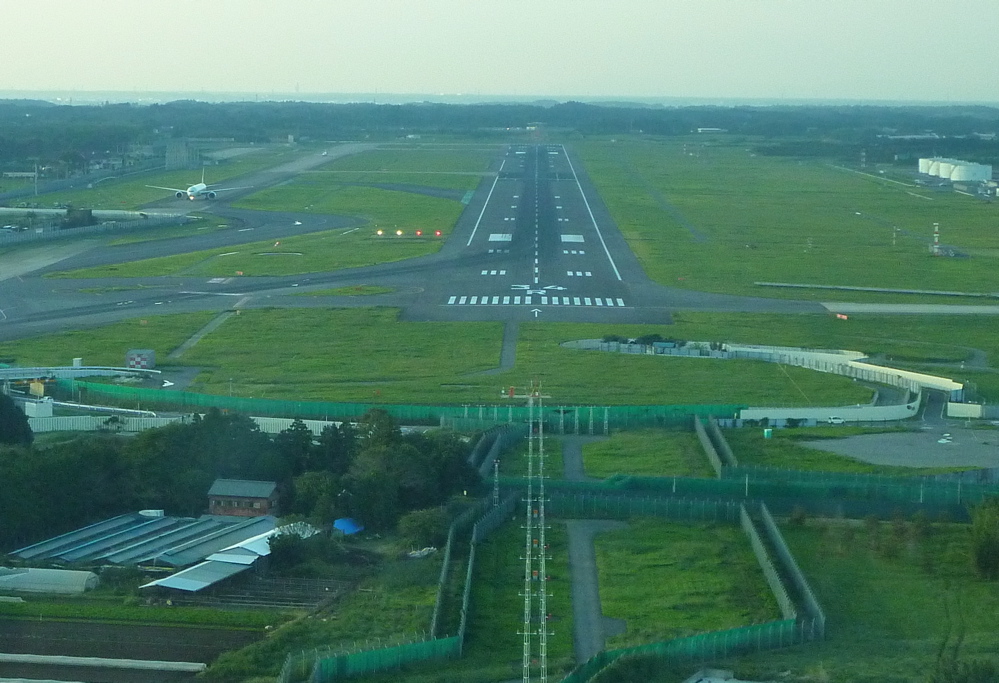
Waiting to depart 34L at Narita for San Francisco.


In the forward galley at Narita headed for Saipan.


This layover in Kensington, during a London Heathrow trip had additional benefits. See the young fellow to my right? He's my cousin Jan's son who is spending a semester in London. I was a little worried that he might find dinner with four (old) guys a bit boring. I was wrong though as we enjoyed a spirited conversation. 


On our way home from Paris. Next stop, Salt Lake City.


In Frankfurt as we seek after dinner entertainment. 

To read a little about my last Asian trip and why I've been so busy, click here.

Thanks for reading and I hope to have more up soon.

Rand

Thursday, November 25, 2010

Happy Thanksgiving.


I've spent many Thanksgiving and Christmas holiday's aloft in a variety of airplanes over the years, but thanks to seniority I get to spend them at home with my family now. That's about to change however with my latest aircraft bid, but what the heck. 


Both NWA and DAL have been very good about supplying turkey dinners to working crews.


And so have layover hotels who feel the plight of junior crews away during holidays. Thank-you, it's much appreciated.

So to all my friends out flying and to those who take the time to read my blog, thanks very much and Happy Thanksgiving. 

Rand

Monday, November 22, 2010

The (fabricated) news that's fit to print according to the LA Times.

It's been a while since I've written a post and I'll get a new one up shortly, but I'm compelled to address this news account by the Los Angeles Times. Here's the headline.

"DELTA AIRLINES PILOTS GET LOCKED OUT OF COCKPIT FOR NEARLY FOUR HOURS."

Somewhere over America in a pilotless jet airplane!

What??? 

I don't know how you read this, but I had visions (see above) of a pilot at 35,000 feet, sweat poring from his brow, feverishly beating on the cockpit door trying to regain entry as his B-767 sped through the atmosphere at mach 80, mothers with young children crying and praying for help. How could this have happened I wondered? Well, rest assured... it didn't.


OK, I really didn't think that, but I'm certain that many, unaccustomed to air travel, had  visions of a drone commercial jet floating through their mind. And it's exactly what the writer intended when he wrote it and the editor hoped for when he approved this misleading caption. But after you read the article you eventually learn... Oh, they were on the ground, at the gate at LAX and the flight was delayed. Here, you can read it for yourself.

I don't mean to minimize the situation; an unspecified number of paying passengers, people whom I depend upon for my livelihood were regrettably inconvenienced, as well as others downline whose transportation was linked with this aircraft or crew. From my viewpoint though, the reader has been mislead purposefully in an attempt to sell newspapers. This is journalistic sensationalism at its best and the news media wonders why readership is down and trust in their product is low. 

Headlines that once only appeared in the ENQUIRER are surfacing in mainline publications like the LA Times these days. I'd hardly consider them a news source after reading drivel like this. 

Tuesday, October 26, 2010

Returning to Asia

Let me address a point made earlier by Mark Lawrence.
Mark asked about the farmers home located smack dab in the middle of Narita Airport.

Here it is.

Mark, here's the photo to which you referred. This is the farmers home who absolutely, unequivocally, with out hesitation, refused to move as eminent domain forced others out. The story goes that the emperor gave either him or his family this land and he wasn't leaving and that's that! So they constructed NRT around him and cordoned him off. His home is located between taxiway Charlie and the JAL maintenance hangar. The main terminals are located to my back in this picture. To the left you can see the guard tower, manned 24 hours per day to keep an eye on this fellow. But here's the interesting or clever aspect of this situation. Do you see the little tower that rises from the roof of the building? It's a clock tower that faces directly at the guard tower. The guard is forced to observe a clock all day long and time drags when you constantly check the time. I'd like to meet this clever farmer, although I've never seen any activity around this property.


Here's a different angle that better depicts the guard and the clock tower as a JAL 747 taxi's past in the background.


And finally, here's an aerial view of the compound that really shows the position of the farmers home with regard to aircraft activity. He's situated between two major taxiways with the main terminals and the JAL maintenance hangars nearby. Mark... you and your son would never have to leave home again to take an aircraft shot if you lived here!


Before I get into my new post, let me send my congratulations to Justin Schlechter, who just had his first story, HOMECOMING, published in the December 2010 issue of AIRWAYS MAGAZINE. Justin is a 747-400 copilot; to learn more about him and his world-wide adventures, visit his blog at POSITIVE RATE. Congratulations Justin, you'll enjoy a wonderful relationship with the Weggs and everyone at AIRWAYS.


OK, after a fantastic Paris layover with Dave and Thad it's back to Asia again with layovers in Beijing, Narita and Guam before returning to SEA and commuting home. 


Bill, to the right, and I had flown into SFO the afternoon before in a 757 and enjoyed a downtown layover where I indulged in another fine Italian dinner at my favorite San Francisco Italian restaurant on Polk Street. As good as it is though, no one beats my wife's Italian cooking. Bill and I met John here at the International terminal at SFO the next day to plot our course to Narita. We flew the Pacific on a random track south of Anchorage as Bill reads the coordinates and John plots them on our Pacific Orientation Chart. I'd flown the Quiet Bridge arrival the day before, so this would be Bill's leg uploading the route, leaving me to check and confirm the waypoints.

The Final Product

And this is how our orientation chart looks after completion. It's a little hard to see, but we leave SFO and fly north up the coast towards Seattle before turning out to sea over the North Pacific. We'll pass well south of Anchorage and turn more westerly near the end of the Aleutian Island Chain. You can see the fixed tracks above ours at this point.  We'll fly south Sea of Okhotsk and skirt the Russian coast before entering Japanese airspace. 

This route, chosen by our dispatcher, will keep us away from the strongest winds aloft and avoid several areas of scattered thunderstorms and turbulence. Our total flight time is predicted to be 10:52, ten hours fifty-two minutes to cover 4,573 nautical miles.  Today's fuel load equals 144,700 pounds or roughly 21,600 gallons of gas... Jet-A to be specific.


As I'd mentioned earlier, this is Bill's leg so I'll go out and do the walk around inspection. This is a Boeing 767-332ER that since the merger hasn't seen the paint shop yet. I've always liked Delta's old red/blue widget tail; it was distinctive and easily recognizable in the marketplace and I could never figure out why they went to this wavy colored tail design. I suspect that it was change for the sake of change and didn't serve the corporation well. 

On the other hand, Northwest created it's image (not necessarily always good) in 1948 with the "Red Tail" and maintained it until the merger with DAL on 2009. I've heard stories from  business travelers arriving at Asian airports after being away from home for months, seeing the NWA red tail and feeling like they were home. It may sound corny but it's true and this is an excellent example of a marketing department creating a recognizable image.

Frankly, I'd like to see DAL return to its roots and resurrect the original widget and it's previous red/blue pilot wings; distinctive, marketable and recognizable images. At NWA we enjoyed the industry's most unusual pilots wings in the form of our "US Airmail" wings designed in 1929. I've written about them many times so won't bother to go into it again except to say that they set us apart. 


Here's a little more information about our airplane that we'll fly today.


I've returned to the cockpit where Bill and John have finished most of their preflight assignments. In Bill's case, he activated the flight computers, fixed the aircrafts current position at the gate via the GPS and uploaded our flight plan, winds aloft and descent winds. John checked the aircraft logbook, checked the potable water level, waste tanks and is available to do anything else that crops up. After I get into my seat I'll preflight several panels, discuss the logbook with John and review the route uploaded into the computer and call for the Preflight checklist as passengers board and flight attendants make them comfortable. 

I've also met with our Purser to discuss our route, weather, ETA and aircraft cabin systems. I always finish my brief with, "If it's important to you, it's important to me," which is my way of letting the purser know that I value their input. Let's face it, I'm very much removed from what goes on back here and will make decisions based on the flight attendants judgement.  


We've pushed back from gate 10 at the International Terminal at SFO, have completed the before start checklist and have been cleared to start the engines. That's the first officers job now as I communicate with the tug driver, set the brakes and monitor the start. 

Bill's completed both starts, we've been waved off, completed a before taxi checklist and I asked Bill to obtain a taxi clearance. This also signals him to extend the flaps to the five degree position. We've just been cleared to taxi to spot seven behind this Virgin America A-320. Believe it or not, but this is my first time leaving from the International Terminal at SFO as my previous Honolulu experience departed from the domestic terminal.


We're north of SEA and Vancouver headed towards Anchorage when United passed us by.


Nearly eleven hours later we broke out of a high overcast to land on runway 34R at Narita


Now we're at that hold point called "the north hold point" if I remember correctly as a DAL A-330 lands on 34R. As we taxied to the gate we saw five.... yes five company aircraft land so we need to scoot right along so we don't get stuck in the back of the customs line. 


We're looking for gate 14 just around the corner past this 747. The great part about arriving at NRT is that the hotel will have several busses waiting in the pickup area for us. No waiting! This is only a nine day trip so Bill and I will spend six days in Asia flying to Guam and Beijing before flying flight 174 to SEA. That flight will cover 4,822 nautical miles in ten hours 52 minutes. 

Once again, thanks for reading.

Rand


Friday, October 8, 2010

Photos from Chris Sloan

I'm working on posting pictures from my latest Asian trip. In the meanwhile here are a couple of galleries from Chris Sloan that I'm sure you'll enjoy.

This is a gallery of shots that Chris took from a recent visit to SEA and the Boeing Museum of Flight.

The 787 (Dreamliner) recently visited Ft. Lauderdale and Chris ventured over with his camera to create this  Gallery
Want to learn more about Chris Sloan? Visit his fantastic site at AIRCHIVE.COM


Just in case you're unfamiliar with Boeing Field and the Museum of Flight, here's an aerial shot taken while landing at SEA, just at the top of the photo. You pass directly over Boeing Field when landing to the south at SEA. The museum (glass enclosure) is located on the right side, near the departure end of runway 13R